The “Maestro” is no More
Alan Greenspan passed away on June 22nd. He was 100. Dubbed the “maestro”1 for his almost two decades as the Federal Reserve chair when the American economy flourished. He got help from his predecessor’s victory over unrestrained inflation and technological changes during the internet era that boosted productivity. Greenspan smartly relied on intuition and data analysis from information that he gathered from businesses, consumers, and investors.
Influenced by the free-market thinking Ayn Rand, Greenspan embraced the laissez-faire concepts of capitalism. He believed that societies work best when their citizens pursue self-interest. Despite coining the popular term, “irrational exuberance”, Greenspan did not attempt to prick asset bubbles. He believed that the financial market would regulate itself by punishing bad actors. The “Greenspan put” or the market belief that the Fed would step in with a rate cut or liquidity injection to prevent any damage from financial breakdown became the norm so much so that it morphed into the “Fed put” over subsequent decades.
The criticism of Greenspan came after his retirement, during the financial crisis of 2008. Under his watch the banking industry enjoyed a lighter reign from regulation and trading in complex derivatives. Mortgage finance companies, Fannie Mae and Freddie Mac, created a securitization boom by lending aggressively. After the financial damage to banks and mortgage companies, a contrite Greenspan accepted that his faith in market participants behaving rationally stood shaken.
Long live the “Maestro”
A month prior to Greenspan’s death, on May 24th, at his swearing-in ceremony at the White House, the incoming Fed chair Kevin Warsh brought the “maestro” onto centre stage again. Warsh said,
“At the swearing-in of Alan Greenspan at this very place in 1987…Chairman Greenspan was the first to tell me and show me what this role demands…Like Alan, I intend to fill the role of chairman with energy and purpose…”2
The new Fed chair began his term by severely curtailing the statement released after the rate-setting meeting. He also removed forward guidance that signaled the Fed’s next move to the markets. He declined to submit his “dot plots” to where he sees interest rates are headed this year and next. Warsh talked about productivity led growth caused by Artificial Intelligence (AI) is “not something that we fear but something we embrace.”3 Warsh’s comparisons with Greenspan couldn’t be more obvious!
Warsh was critical of the Fed leaning too heavily on official data to make monetary decisions. He thinks that this data either misrepresents the current situation or suffers from lags. According to him the poor data caused the Fed to make poor decisions as inflation ran above their target for more than five years. He recommended setting five “task forces”4 to review the Fed’s communications, balance sheet, its use of data sources, inflation framework and productivity and jobs.
A less communicative Fed may cause increased volatility in the Treasury market, which we don’t think is a bad thing. Warsh explained that the markets perform best when they react to incoming data rather than deciphering how the Fed will react. However, increased volatility may lead investors to demand additional compensation. Given the borrowing needs of the U.S. treasury, any additional premium demanded by investors may deteriorate the government’s fiscal situation.
Repeated use of the term “price stability” and the Fed’s commitment to being “strong, unanimous and unambiguous” has the market believing that Warsh is a “hawk” on interest rates. We at Canso think that these are early days and the jury is still out. We would need more convincing. We are skeptical about AI-led productivity growth when this technology is still in its infancy. Thus far, it is a race to spend and outpace each other. The five largest hyperscalers, Amazon, Microsoft, Alphabet, Meta, and Oracle, intend to spend between US$700 billion and US$900 billion5 on capital expenditures in 2026. Most of the spending will be on data centre buildout, semiconductors and computing equipment directly tied to AI infrastructure. These high-quality companies are tapping the bond market aggressively, which may cause a “crowding out” of other borrowers including the government.
Our other worry is about the taskforce on data gathering. What if it produces a statistic that is at odds with “old fashioned” survey methodology? Which would the market believe in? Which would the less communicative Fed believe in? We know which one the U.S. president will believe in.
Fed is Cook-ed
The U.S. president will try to oust any Fed governor who does not agree with lower rates. He tried it with Lisa Cook, a sitting governor. He came close. The Supreme Court blocked the president from ousting Cook in a narrow vote. The justices believed that she should have been given the opportunity to defend herself but it did not clarify the circumstances under which he may fire Cook. Under the Federal Reserve Act of 1913, Fed governors can only be removed “for cause”6 by the president. And “for cause” remains a debatable term.
The Supreme Court, in their judgement, highlighted the importance of the central bank to operate without political interference. However, in that same ruling, the president’s ability to fire other independent regulators was affirmed. So, the Fed remains the last bastion of independence. But for how long?
Even before the court ruling, the U.S. Senate had delayed the confirmation of Warsh until the investigation against Powell was dropped. The political pressure was the reason Powell has stayed on at the Fed, something not done by a chair since 1948. Powell’s presence on the twelve member Federal Open Market Committee makes the rate decisions complicated.
Burning Bridges
The new and yet to be opened bridge spanning Windsor and Detroit has been named after Gordie Howe, the Hall of Fame right winger who played twenty-five seasons with the Red Wings, collecting four Stanley Cups for the storied franchise.
In 2012, the Canadian Federal Government signed a Crossing Agreement with the State of Michigan outlining the construction and future operation of the bridge. The agreement established that the Canadian Government would fund construction of the bridge including the cost of acquiring land and installation of on-ramps on the U.S. side. The projected $3.8 billion CAD construction cost would first be recouped by the Canadian government from tolls and the bridge would be owned equally by Michigan and Canada. The following year, the project received U.S. federal approval from the Obama government.
As is typical, a tender process was run to solicit bids for the construction as well as operational/maintenance contracts for the bridge. The winning consortium; “Bridging North America”, consisted of a trio of American, Canadian, and Spanish firms which would receive payments for their operational and maintenance services over an expected thirty-year term.
On June 29th, S&P Global Ratings raised its rating on project debt issued by Bridging North America from BBB- up to BBB reflecting the fact that construction was substantially completed weeks earlier. Along with the upgrade, S&P assigned the rating outlook as “stable” however they also stated the rating could be lowered if
“unfavourable political events affect revenues should the Windsor-Detroit Bridging Authority be unable or unwilling to make timely availability payments.”7
As widely reported, a recently scheduled ribbon-cutting ceremony was abruptly cancelled, with a press release stating
“Canada and the United States have agreed to delay opening of the bridge, taking the necessary time to resolve any outstanding issues.”8
On June 26th, Bloomberg reported that Commerce Secretary Howard Lutnick intervened to delay the opening of the bridge and is looking to renegotiate the deal for a larger share of the toll revenue. A spokesman for the Commerce Department wrote;
“Secretary Lutnick is committed to securing the best possible deal for America on the Gordie Howe International Bridge.” 9
Then on July 10th, President Trump posted a statement indicating that a renegotiation had taken place resulting in a better deal for the U.S. Since this announcement, there has been significant confusion about the exact details of the deal. Prime Minister Carney initially stated that the net tolls (after debt service) would be split with the U.S. but when pressed further the following day, indicated the tolls would be split after only factoring operating costs. Bloomberg also reported that it had been leaked a copy of the new agreement which did not mention debt service. This seems to indicate that the original agreement for Canada to recoup construction costs prior to a sharing of tolls is no longer the case.
Sometimes in financial market transactions one party may have leverage over another party and could choose to modify a pre-struck agreement at the 11th hour to gain better economics (sometimes referred to as “retrading”). The problem with renegotiating a deal is that what you gain today, you may pay for in the future. Your counterparty may be unwilling to fund projects or investments up front with the promise of recouping that sum from cashflows and instead may look for a sharing of payments. In addition, creditors who may fund a significant portion of those upfront costs may ask for additional guarantees beyond expected cashflows. Those guarantees will often be factored into the credit ratings of the providing guarantors. So, while the party driving the renegotiation thinks they extracted additional value in the short-term, it’s more difficult to measure in the long-term.
Lay of the Land
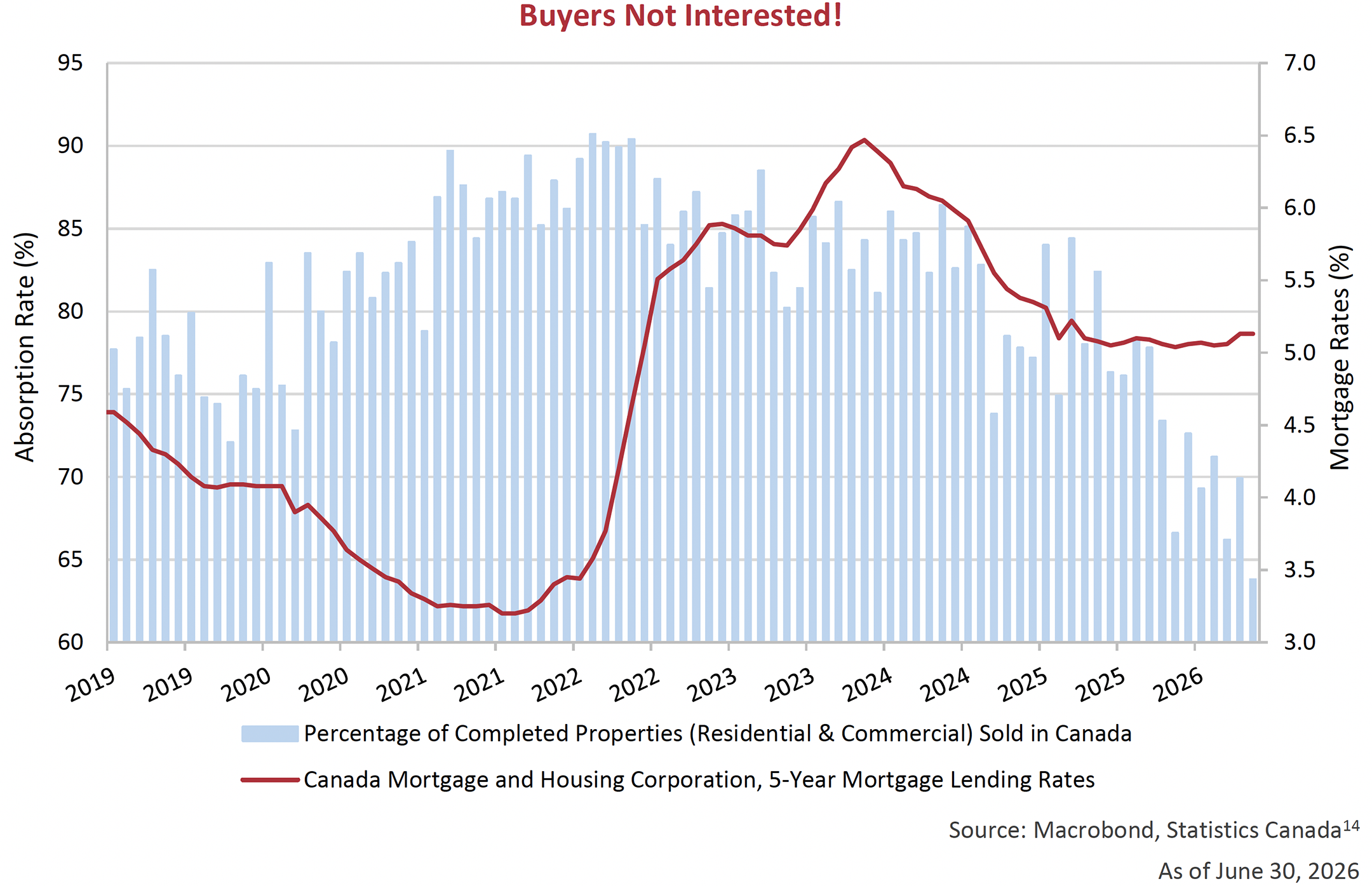
The Canadian housing market has seen a steep decline in price from its peak in 2022, about 20% nationally and over 30% in some cities. Despite the drop, housing remains unaffordable for many new home buyers as income levels have not kept pace with house prices. Incentives are rampant to lure homeowners. Recently, Mattamy Homes announced a program to their buyers in Calgary and Edmonton. They proposed to cover mortgage payments10 for a year up to a maximum amount of $50,000. Not to be left behind, another developer, Greenpark Group offered its clients to “live mortgage-free up to 30 months” at a new high-rise in Mississauga.
As condos remain unsold, developers are complaining. They are unable to sell enough units to qualify for construction financing. Banks typically require that developers presell about 70% of their units before extending funds to begin construction. This is an industry practice, not mandated by the bank regulator, the Office of the Superintendent of Financial Institutions (OSFI). However, banks enjoy lower capital requirements if presales exceed 50% of the units in a condo project. To hasten their sales, one Oakville developer11 offered a heavy discount to a buyer in exchange for a non-disclosure agreement. In this case, the buyer agrees to be mum and not divulge the discount that may have a knock-on effect on the price of other unsold units.
A CIBC research report12 indicated that close to 6% of the mortgages will face more than a 40% increase in mortgage debt payments upon renewal this year. For many of them in Ontario and British Columbia, home prices are below their level from 2021. An RBC research paper mentions that the construction industry contributed to 6.8% of Ontario’s GDP in 2023. Additionally, they write,
“DSIB (Domestic Systemically Important Bank) bank disclosures suggests exposure to condo developers are manageable, particularly in the context of total loan books.”13
Most bank exposures to condo developers are around 0.5% with only RBC at 1%.
You have read about The Hour Between Dog and Wolf by John Coates on these pages. It is not that the current exposure is “manageable”, it is the rise in cortisol among bankers that comes as losses climb. This is followed by an aversion to risk taking that causes panics and economic downturns.
Not helping housing is the decline in Canadian population in the first quarter of 2026, the third quarterly decline in a row. The influx of temporary residents to fill job openings during the pandemic is now reversing. The federal government is targeting a temporary resident goal of 5% of total population by the end of next year. The current reported population of international students and temporary foreign workers is around 6%. So, the temporary residents would continue to dwindle. The natural change in population or the difference between births and deaths is flat. If this turns negative as well, then our growth may be affected. Maybe, we will need the much-anticipated productivity gains from AI!
The Government is Listening
The housing developer complaints have reached the government, and they are responding with vigour!
The federal and British Columbia governments have developed a plan to purchase condos in British Columbia and turn them into affordable housing. Ottawa’s new created federal agency, Build Canada Homes, is expected to provide financing to purchase the condos. This has come on top of last year’s decision to cut development charges that builders pay the municipalities.
Already facing headwinds relating to the United States-Mexico-Canada Agreement, Ontario had plans to rescue its housing sector. The Building Ontario Fund was launched in 2024 to invest in critical infrastructure in the province including affordable housing, long-term care homes, energy, transportation, municipal and community infrastructure, and critical minerals. The Building Ontario Fund invested in a fund called High Art Capital, which will purchase unsold condos from builders and convert them to rental units. The province and federal government also exempted buyers from paying the harmonized sales tax on their purchase resulting in a discount of 13%.
OSFI for its part lowered the domestic stability buffer, a form of capital requirement for the Canadian banks. This should encourage banks to lend more domestically, not only for “nation-building projects” but also for mortgages. Mortgage loans anyway carry a lower risk weighting than commercial loans. OSFI had last lowered the stability buffer during the early days of the pandemic. They then raised the capital requirements as the economy recovered.
Hydration Break
Similar to some of the recent world cup matches, much of the rates and credit markets have finished the first half largely unchanged.
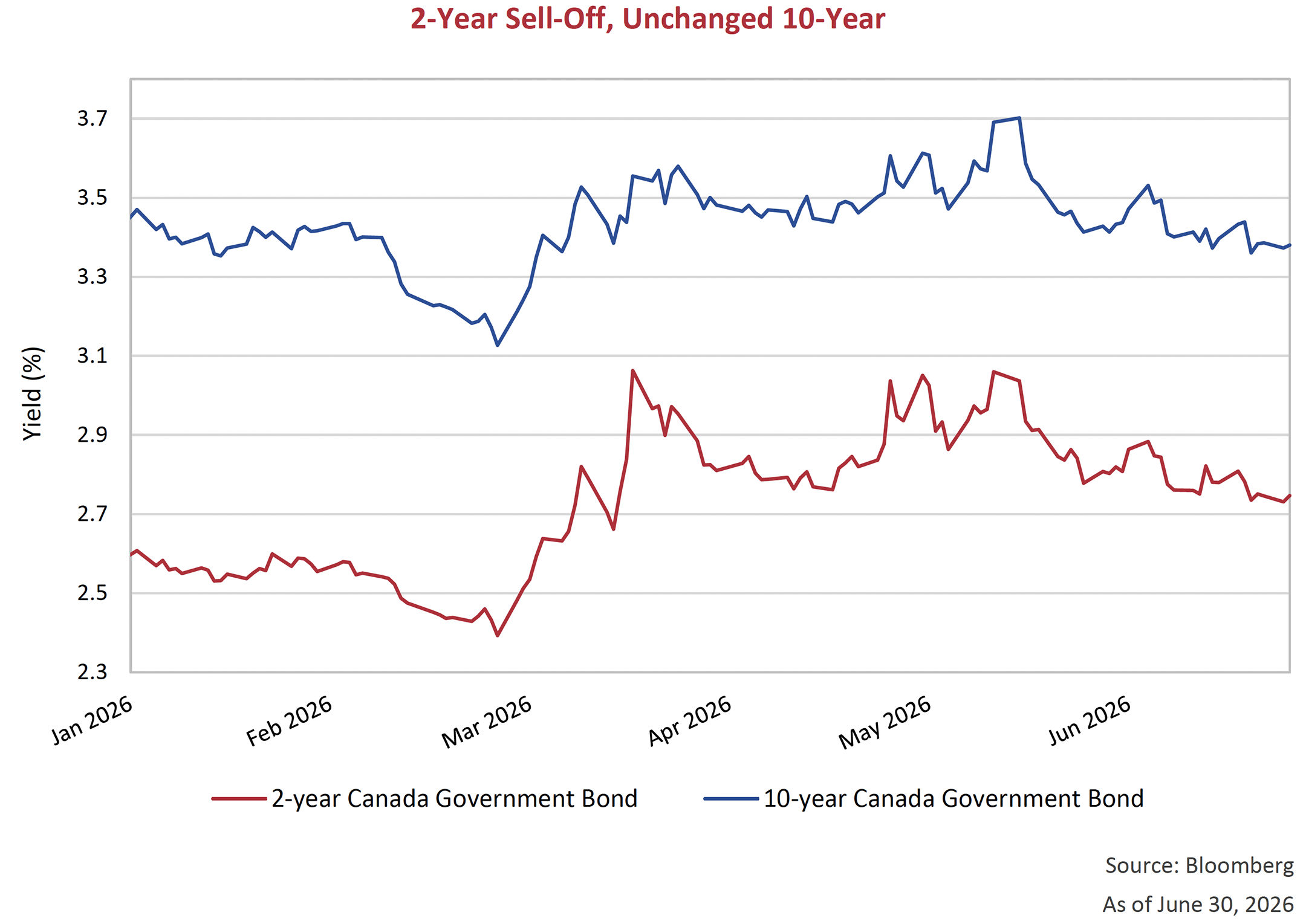
10-year Canadian government yields rallied a modest five basis points over the first half of ’26, closing at a yield of 3.38%. After corporate credit spreads rose in the first quarter of the year, they finished the second quarter back where they began. Both Canadian and the U.S. Investment Grade spreads showed a slight tightening of 2bps for the first half; closing the Canadian index at a spread of 87 basis points (bps) and the U.S. at 77 bps.
Despite the muted changes above, where a portfolio sat on the curve did make a difference. Within the Canadian Corporate market, owning a portfolio of bonds in the middle of the curve (5-10 years) with an average duration of 6 years, has given you a better return by 46 bps versus a “barbelled” portfolio of bonds consisting of front-end (1-5 year) bonds combined with some long-end (10+ year) bonds where again the average duration of the portfolio calculates to 6 years. This disparity was partially driven by a sell-off in front-end Canada bonds, where we saw the yield on 2-year Canadian Government bonds move 17 bps from 2.57% at the start of the year to 2.74% on June 30th.
The ICE BofA Canada Broad Market Index had nearly identical performance to the ICE BofA Canada Corporate Index at 2.2%. The Corporate Index, despite having a higher running yield, has a higher weight of short bonds versus the Broad Index, which were impacted by the sell-off in front-end rates.
High Yield…Stuck In A Range
It seems as though the headline ICE BofA U.S. High Yield Index spread remains consistently pinned around 300 bps. Excluding the 2025 widening around “Liberation Day” tariffs, the headline high yield spread has been approximately 300 bps for the last 18 months.
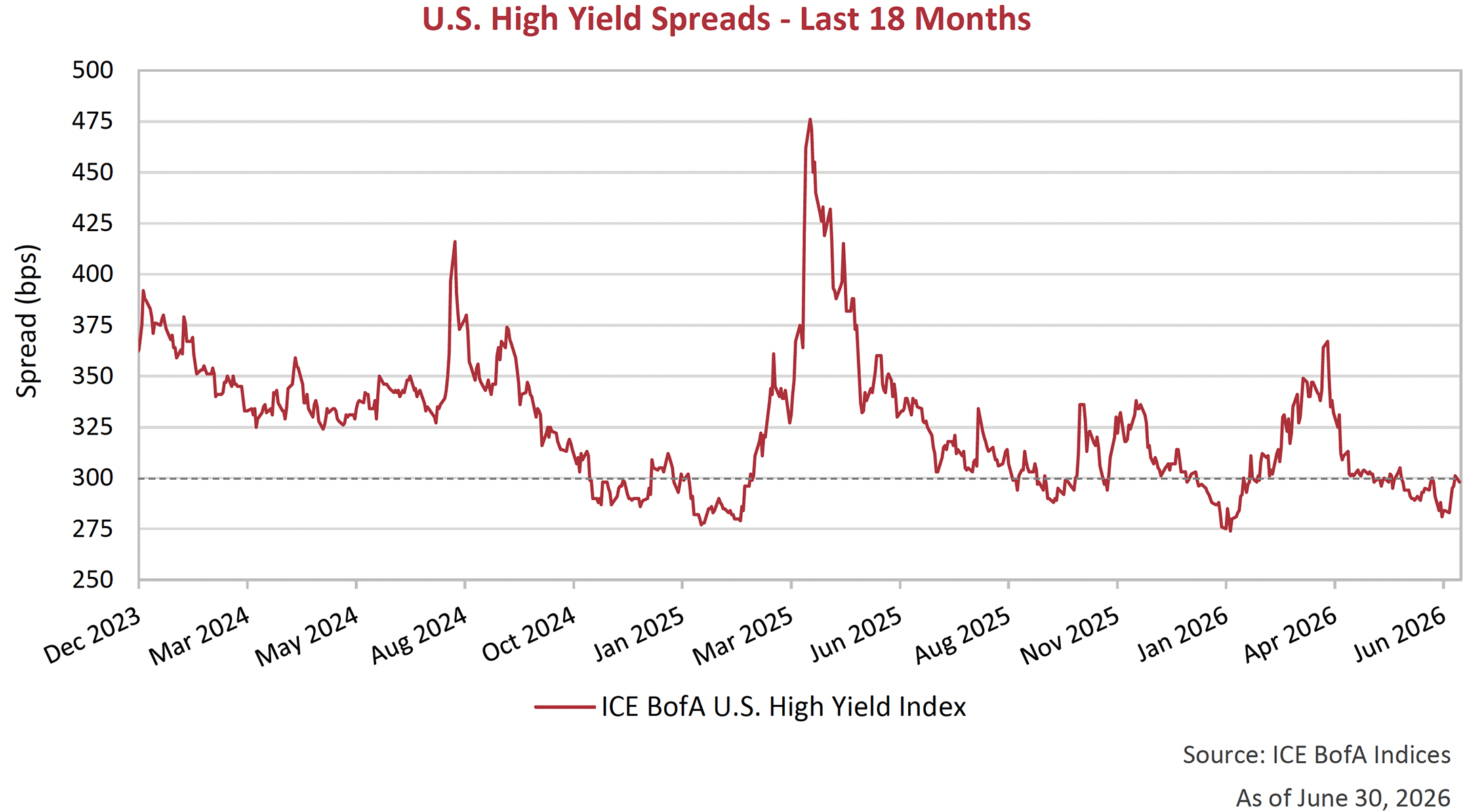
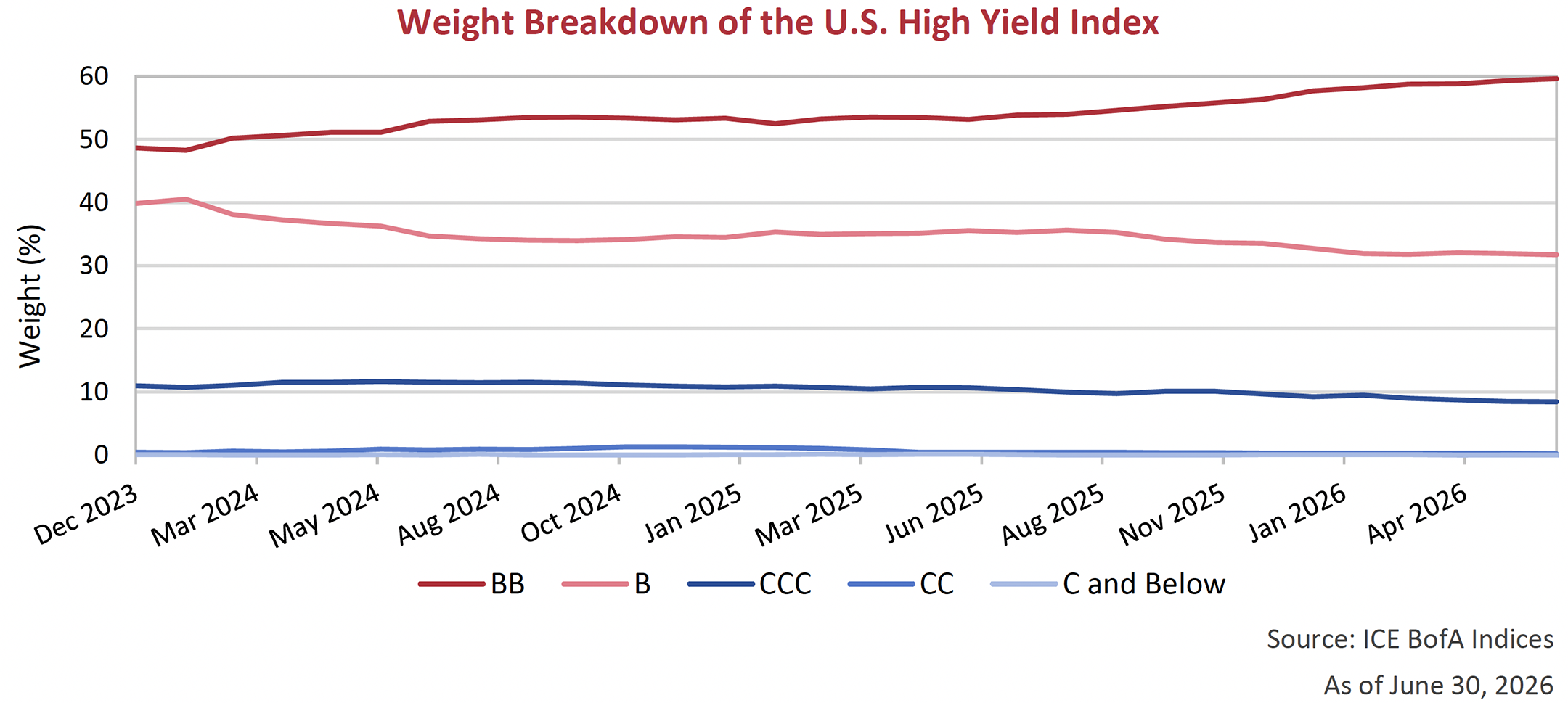
One factor in the lower volatility of the high yield spread has been the growth of BB exposure within the index, off-set by a decrease in Single-B exposure. Since the end of 2023, the weight of BB issues in the index has grown from 49% at December 2023 to 59% now. Single-B has declined from 40% to 31% over the same period. The daily change in spread of BBs is about 25% lower than that of Single-Bs.
So what is driving this trend? Within the High Yield bond market, BBs are growing as issuers are happy to borrow at historically very tight spreads. Just how tight are BB spreads? ICE BofA Index has been tracking BB spreads for the last 355 months. If we examine the tightest 35 months, 18 of those months fall within the 1996-1998 period immediately prior to the Long-Term Capital Management (LTCM) crisis, and the next concentrated tight period is 2025-2026 with 13 months counted.
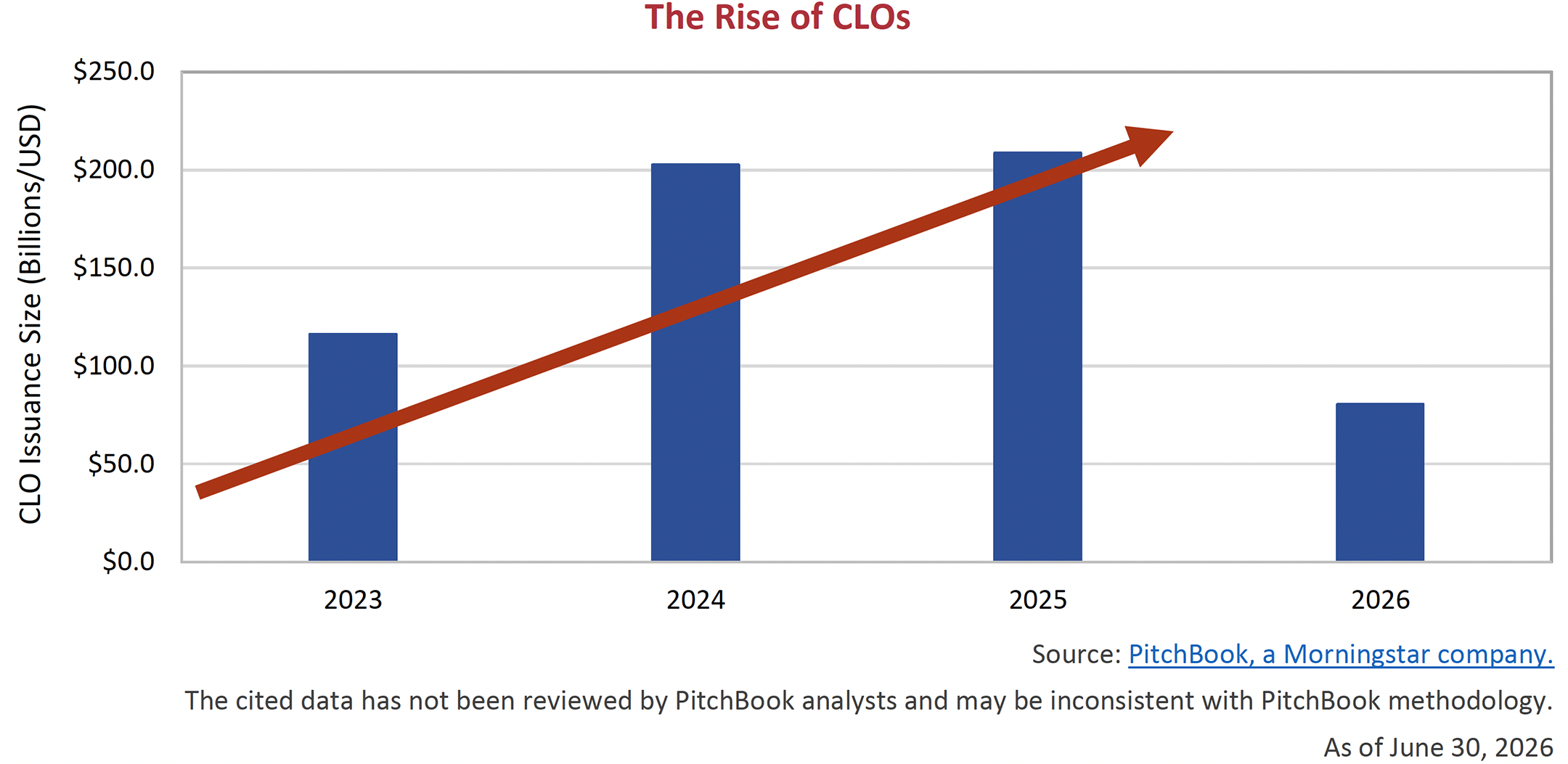
Single-B issuers have trended towards the leveraged loan market, with growth of approximately US$95 billion in Single-B rated issues in the Morningstar LSTA U.S. Leveraged Loan Index since the end of 2023. This growth of Single-B loans is driven by the robust demand for Collateralized Loan Obligations (CLOs). Single-B issues are the lifeblood of these structures, accounting for on average 60% of CLO assets.
On the Horizon
As we always say, we cannot predict with certainty the timing and cause of financial markets repricing. The current market conditions reinforce our intention to keep our clients’ assets invested in securities which we believe will weather a storm. Investors should take a hard look at their portfolios to ensure they have the flexibility and capacity to take advantage of a sell-off fueled by a wholesale deleveraging.
Footnotes
- Source: Stevenson, Richard. (2026, June 22) Alan Greenspan, Fed Chairman Through Prosperity and Crisis, Dies at 100.
- Source: rev. (2026, May 24) Fed Chair Kevin Warsh’s Swearing-In Ceremony.
- Source: Schleid, Taylor and Currie, Ethan. (2026, June 17) Fed Policy Monitor – There’s a task force for that.
- Source: Timiraos, Nick. (2026, June 27) Kevin Warsh Invokes Alan Greenspan to Shrink the Fed—and Strengthen Its Chair.
- Source: Kirsch, Jason. (2026, June 2) AI Spending Is Surging Faster Than Revenue And Markets Are Repricing.
- Source: Smith, Colby and Romm, Toby. (2026, June 29) Supreme Court Victory for Fed Still Leaves It Vulnerable to Trump.
- Source: Ramboll and Global Infrastructure Hub. Gordie Howe International Bridge (United-States – Canada).
- Source: Kitching, Heather and Cochrane, David. (2026, July 10) Gordie Howe International Bridge to open July 27, Ottawa confirms
- Source: Livengood, Chad. (2026, June 30) Why is the Gordie Howe bridge not open yet? It’s complicated.
- Source: Antoneshyn, Alex. (2026, March 26) More housing inventory pushing developers to offer incentives like free mortgage payments
- Source: Alini, Erica. (2026, July 4) Condo developers are offering big discounts in exchange for signing NDAs.
- Source: Tal, Benjamin and Judge, Katherine. (2026, Feb 18) Canadian housing: Anatomy of a correction
- Source: Michalski, Mark. (2026) Concerns regarding Toronto condos.
- Source: Statistics Canada. Table 34-10-0145-01 Canada Mortgage and Housing Corporation, conventional mortgage lending rate, 5-year term,